
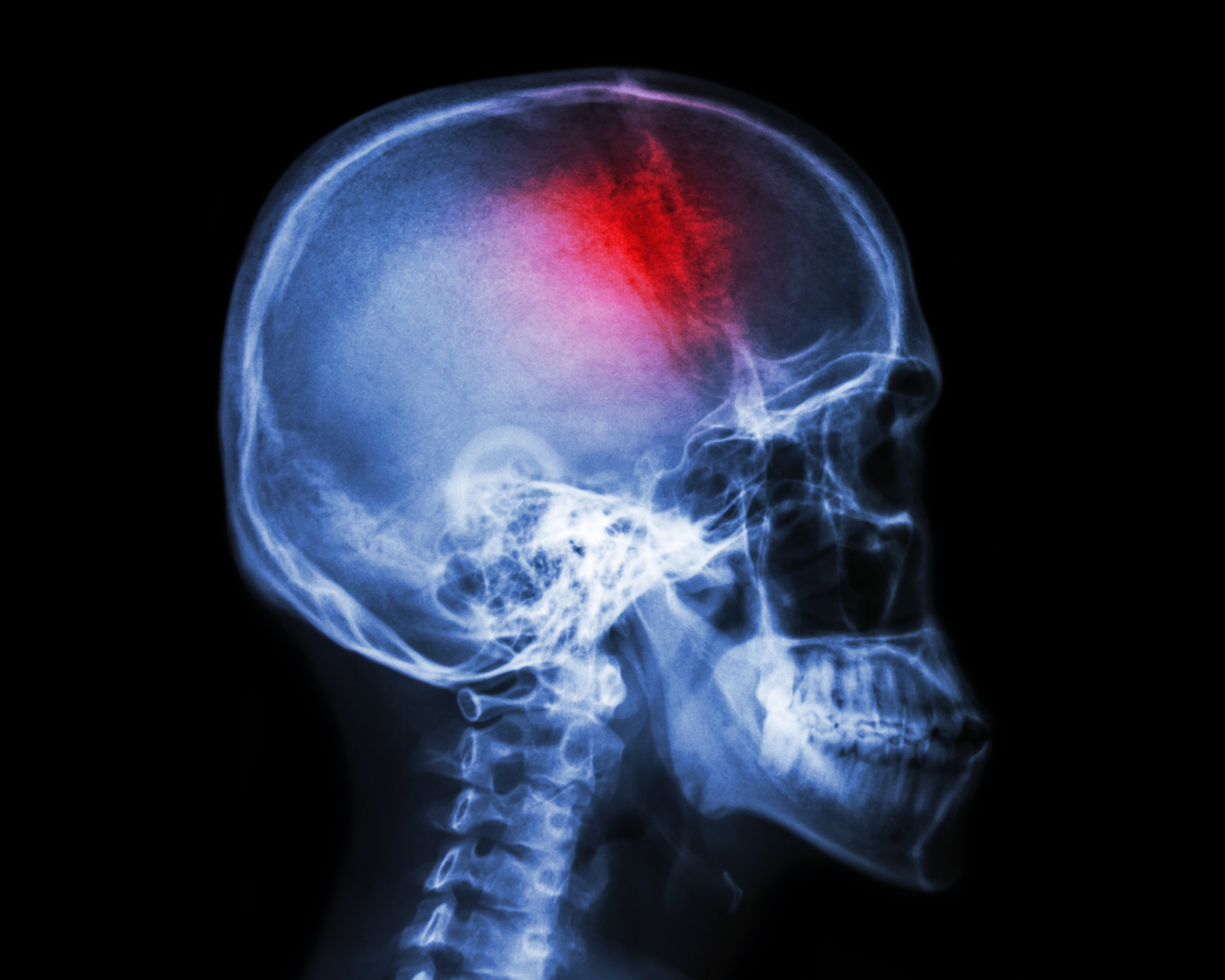
The scans came back clean. The hospital discharged them the same day. Yet the person who came home is not the person who left.
That gap is where a brain injury case is won or lost. Not in whether the injury is real, but in demonstrating its effects to people who weren’t there – to people who never witnessed the changes. A Macon traumatic brain injury lawyer builds that case through medical records, neuropsychological testing, expert opinions, and the testimony of people who knew the person before the accident occurred.
If you or a family member suffered a brain injury in Macon, Warner Robins, or anywhere in Middle Georgia, Gautreaux Law brings more than 25 years of Georgia personal injury experience to traumatic brain injury claims. The firm has recovered over $100 million for clients across a range of personal injury cases.
A broken femur appears on a film. A brain injury often does not.
The CDC is direct about this. A brain scan is not needed to identify a mild TBI or concussion, and even where the injury does not show up on imaging, a person may still have one. Imaging is used to look for bleeding and other findings that need urgent attention, which is a different question from whether the brain was injured.
That creates the problem these claims tend to run into. A normal CT gets read as the end of the discussion. The record says the imaging was unremarkable, and the argument built on it is that nothing happened.
There is a second trap in the vocabulary. The CDC notes that providers may describe these injuries as mild because they are usually not life-threatening, and that the effects can still be serious. “Mild” is a clinical label about the injury. It is not a statement about what happened to a person’s memory, temper, concentration, or ability to hold the job they had.
The word concussion carries a related problem. Concussion, minor head injury, and mild TBI are used by different providers to mean overlapping things, and clinical guidance favors mild TBI because the alternatives carry connotations that invite misreading. They are not strictly interchangeable, and which term appears in a chart reflects the writer as much as the injury. A file described as a concussion case is not a smaller case for that reason. What it is worth depends on the documented effect, not on which of those three words the first provider wrote down.
Not every brain injury case has this problem. Where the damage is visible on imaging and the person is in a rehabilitation facility or was never able to return home, the dispute is rarely about whether the injury happened. The work there is different, and it runs on what the rest of a life will require rather than on proving that something is wrong.
The proof in these cases is assembled rather than found in a single document.
The medical record from the first hours forward. What was reported at the scene and in the emergency department, what symptoms appeared and when, and what the follow-up visits recorded. The CDC notes that some symptoms appear right away while others may not show up for hours or days, so a record that starts with a headache and grows over two weeks is not, by itself, evidence against the injury. What that pattern means in a particular case is a medical judgment.
Neuropsychological testing where it fits the case. These tests can help a provider identify the effects of a brain injury on memory, attention, processing, and other functions. What they measure is effect. They do not by themselves establish that a particular crash caused what they measure, which is why they belong alongside the rest of the record rather than in place of it.
The people who knew the person before. A spouse who can describe what conversation used to be like. A supervisor who can say what the work product looked like a year ago. A teacher, a coach, a friend who noticed the change before anyone used the word injury. This testimony carries weight because these are the people who watched the change happen. It does not replace the medical record. It gives the providers and the experts something concrete to explain.
The work and school record. Performance reviews, attendance, grades, the shift that had to be dropped, the tasks that got reassigned. These are contemporaneous documents created for other purposes, which is exactly what makes them hard to argue with.
The first week, where the head injury was not what got treated. A person with a fractured leg and a head injury gets the leg treated first. The head injury can go unrecorded in the early notes, and that silence later gets read as evidence it did not happen. Reconstructing that week from the ambulance record, the intake notes, and the accounts of the family who were in the waiting room is often what closes the gap.
The competing explanations, addressed rather than avoided. Sleep disruption, pain, medication, depression, anxiety, and prior headaches can all produce overlapping symptoms, and they will come up. Where they are part of the picture, they get identified and sorted out by the treating providers rather than left for cross-examination to discover.
No single item on that list carries causation on its own, and neither does the sequence by itself. A person who was one way before an event and different after it, with symptoms appearing in a pattern consistent with the injury and documented over time, has the factual foundation. Causation is a medical opinion built on that foundation by a qualified provider who has considered the alternatives. Timing supports it. Timing is not it by itself. That opinion also has to satisfy a standard under the law. Expert testimony in Georgia civil cases is governed by O.C.G.A. § 24-7-702(b), which requires that the opinion rest on sufficient facts or data, be the product of reliable principles and methods, and reflect a reliable application of those principles and methods to the facts of the case. The statute directs Georgia courts to draw on the federal Daubert line of authority in applying it. A treating physician’s causation opinion is admissible only if it meets that test, which is why the record the opinion is built on matters as much as the credentials of the person offering it.
Two different things get called causation, and running them together causes confusion.
One describes how the injury happened, the mechanism. The other type of “causation” describes the actual injury, its clinical severity, in the familiar mild, moderate, and severe terms. These are separate concepts even though both use the term “causation”, and a description on one of them does not fix where an injury falls on the other.
What matters for a claim is not the label on its own. It is what the injury did to a specific person, documented over time.
If you have symptoms after a head injury, that is a medical question before it is a legal one. The CDC lists danger signs that call for emergency care, including a headache that keeps getting worse, weakness or numbness, loss of coordination, and seizures. Those call for 911 and doctor evaluation rather than a phone call to a law office.
The work that can no longer be done. Not just time missed, but capacity lost. A person who returns to the same title at reduced output, or who leaves a career for something less demanding, has a loss that a wage statement does not capture on its own.
The care and support required. Cognitive rehabilitation, therapy, medication management, and in serious cases assistance with tasks that used to take no thought at all. Where the need is permanent, that cost is projected through a life care plan rather than estimated from current bills.
The duration. Many people recover. Some do not, and a claim that settles before the trajectory is clear can leave a permanent problem paid for as a temporary one. The pressure to resolve early is real, and it is strongest in exactly the cases where the picture has not finished forming.
What the household absorbed. A spouse who becomes a caretaker, a parent who leaves work to manage appointments, a family that reorganizes around the injury.
Senate Bill 68, signed April 21, 2025, changed the law and specifically limited how the amount of noneconomic damages (such as pain and suffering) may be argued to a jury. That argument now has to be rationally related to the evidence rather than offered as an untethered figure, which puts more weight on the life care plan, the vocational assessment, and the functional record that support it. The same legislation permits evidence of the amounts actually billed and the amounts paid or payable for medical care and limits recovery to the reasonable value of care that was reasonable and necessary. These are all recent changes to Georgia law, and there remains some uncertainty about exactly how they will be applied in courtrooms across Georgia.
Brain injuries reach this office from several directions, and the liability analysis differs with each.
Motor vehicle collisions, where the case runs on the same fault questions as any other car accident claim. Falls on property that was not maintained or was left unlit or unmarked, which run as slip and fall claims. Workplace incidents, which can involve both a workers compensation claim and a separate claim against a third party.
Inside the workers compensation claim, one designation is worth knowing. Severe brain or closed head injury is one of the categories Georgia’s compensation statute (O.C.G.A. § 34-9-200.1(g)) designates as catastrophic, and the statute qualifies it. The injury has to be evidenced by a severe disturbance of sensation or movement, of communication, of integrated cerebral function, or of consciousness. A severe episodic neurological disorder qualifies, as does a condition at least as severe as those. Where the designation is obtained, benefits can extend past the ordinary duration limits while eligibility continues. It is likely worth pursuing inside the compensation claim even when you are also pursuing a claim against the negligent party.
Assaults and incidents involving inadequate security, which can raise a premises liability question against the property or business where they happened.
Where a brain injury contributes to a death, the claim that follows belongs to specific family members under Georgia law and is a different action from the injury claim. That ground is covered on our wrongful death page. That action is created by O.C.G.A. §§ 51-4-1 through 51-4-5. Where there is a surviving spouse, the spouse brings it for the benefit of the spouse and any children, and the spouse’s share is never less than one third under O.C.G.A. § 51-4-2(d). Where there is no spouse or child, the claim passes to the parents and then to the administrator of the estate for the benefit of the next of kin. The estate’s separate claim for medical and funeral expenses and for the decedent’s conscious pain and suffering before death is a different action from the wrongful death claim itself. The important point is that when a death occurs due to negligence, there is almost always two claims – one for the pre-death injuries such as pain and suffering, and another claim for the losses caused by the death itself, sometimes called post-death damages. For example, a family that loses a parent likely loses a lot of income that the parent would have earned if they had lived.
The deadlines deserve their own note in a brain injury case, because the injured person may not be in a position to act on them. O.C.G.A. § 9-3-33 gives two years from the date of injury. O.C.G.A. § 9-3-90 tolls the period for a person who is legally incompetent because of intellectual disability or mental illness, but Georgia courts have generally required that the incapacity exist when the cause of action accrued, and how that requirement applies where the injury itself produced the incapacity is a fact-specific question rather than a settled answer. That is a reason to file a lawsuit well before any deadlines get too close. Where the injured person cannot make decisions, a conservator appointed under Chapter 5 of Title 29 may need to bring the claim, and that appointment takes time of its own.
Brain and spinal cord injuries often occur in the same crash. Where the spinal cord is involved, the lifetime care analysis runs on its own track, and that is set out on our spinal cord injury page.
The record is built before the demand goes out. Where the firm is retained while the details are still recoverable, testing, treating provider opinions, and lay witness accounts are gathered first, because a file assembled after a settlement offer arrives is a file assembled under someone else’s schedule. Where a case comes in later, the work starts with what the existing records and the available witnesses can still establish.
Before and after are documented, not asserted. The claim that a person changed is only as strong as the evidence of what they were like before. That evidence exists in employment files, school records, and the memories of people who have to be asked while they still remember clearly.
Trial-ready preparation. A dispute about an injury that does not appear on imaging is a dispute a jury may have to resolve, and the file is assembled the same way for an adjuster and for a courtroom. Gautreaux Law has tried cases in courts across Georgia, including Bibb County and other Middle Georgia jurisdictions.
Brain injury work in the firm’s own record. Two of the four matters listed below involved brain injuries. One resolved for $10.5 million in an automobile accident matter involving governmental liability, and one for $180,000 in a car wreck. They are listed with their exact labels, the figures are gross recoveries before fees and expenses, and neither of them predicts anything about a different case with different facts.
This page sits within the firm’s catastrophic injury practice.
These results come from the firm’s automobile and commercial vehicle collision work. The case labels are exact, each matter turned on its own facts, and none of them is presented as a typical or expected outcome.
| Recovery | Case Type | Outcome |
|---|---|---|
| $10.5 Million | Automobile Accident, Governmental Liability | Traumatic Brain Injury |
| $1.5 Million | Commercial Van Collision | Wrongful Death |
| $400,000 | Car Wreck | Leg Amputation |
| $180,000 | Car Wreck | Brain Injury |
Each case is different and depends on its specific facts and circumstances. Past results do not guarantee a similar outcome. These figures represent gross recoveries before deduction of fees and expenses.
If you or a family member suffered a brain injury in Macon, Warner Robins, or anywhere in Georgia, Gautreaux Law’s personal injury attorneys will review your case at no cost. The firm handles these cases on a contingency fee, which means no fee unless we recover. Reach our office at (478) 475-3428 or request a free case review online.
“No fee unless we recover” refers only to attorney’s fees. Court costs and other case expenses are typically advanced by our firm and reimbursed from any recovery. Contingent fee arrangements are not permitted in all types of cases. Past results do not guarantee a similar outcome. Each case is different and depends on its specific facts and circumstances.
This page is general information and is not medical advice. Clinical information reflects the Centers for Disease Control and Prevention’s public guidance on traumatic brain injury and concussion.
Reviewed by the attorneys at Gautreaux Law, Attorneys at Law. Last updated July 2026.
"*" indicates required fields
778 Mulberry Street
Macon, GA 31201