
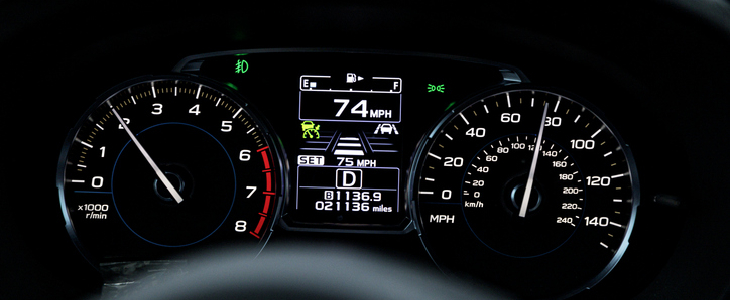
You know the other driver was going too fast. Proving it is a different problem. Speed is almost always disputed after a crash, and it’s almost never measured at the exact moment that matters — the officer’s report comes afterward, witnesses give estimates, and the drivers give their own accounts. What the speed can actually be shown to have been, and what part it played in your crash, is built from all of that together with whatever the vehicles and the road recorded. A Macon speeding accident lawyer at Gautreaux Law puts that record together before it disappears.
If you or a family member was injured by a speeding driver in Macon, Warner Robins, or anywhere in Middle Georgia, Gautreaux Law has represented people seriously injured in speed-related crashes for more than 20 years. The firm has recovered over $100 million for clients, tries cases in courts across Georgia, and works on contingency, so there’s no fee unless we win.
Georgia law sets maximum lawful speeds that vary by the kind of road, and for several categories the limit depends on posted signs. But the most important line in that law is the one that matters in an injury case: those numbers are maximum limits, not a green light to drive that fast regardless of conditions — a special hazard can require a lower speed under Georgia’s basic rules for safe driving. The posted number is a ceiling, not a permission.
The limit can also be altered by other rules. State or local authorities may establish a different limit through the proper procedures, and a highway work zone may carry a temporary reduced limit where one has been properly posted. So the limit that applied where your crash happened isn’t always the number on the last sign a driver remembers passing — establishing which one governed that stretch on that day is part of building the case.
Weather-related hazards are their own topic, covered on our bad weather crashes page. This page is about the other half: a driver over the limit, and the problem of proving it after the fact. Speed alone is also not the same as reckless driving; what separates a simple violation from that more serious theory is the ground of our reckless driving page.
Proving a driver was over the limit is not the same as proving the speed caused your injuries. Those are two separate questions, and a claim that treats them as one leaves the second question unanswered.
Speed as the reason the crash happened at all: A lower speed would have left enough distance or time to stop.
Speed as the reason the crash did what it did: The same impact at a lawful speed would have produced a different, less severe outcome for the people inside.
Those are different arguments with different evidence behind them. A violation can establish an important part of the case, but the claim still has to connect that speed to the crash or to the injuries.
The counterargument is familiar: the driver was barely over the limit, and a few miles per hour couldn’t have made a difference. Sometimes that’s right, and sometimes it’s a question rather than an answer — as a matter of basic physics, the distance traveled during a fixed reaction time rises in direct proportion to speed, while braking distance and impact energy both rise roughly with the square of it. Whether a given difference mattered in your crash is something the physical evidence can address, not something either side gets to simply assert.
If you were over the limit yourself when you were hit, that doesn’t by itself end your claim. It becomes part of the fault question, which is different from being the reason the collision happened. Where a share of fault reduces a claim, and where it ends one, is covered on our Macon car accident attorney page.
Each source of speed evidence answers a narrow question, and each has a limit worth knowing before it’s relied on.
The vehicle’s own data: Where a compatible event data recorder captured the crash and usable data remain, it may hold pre-crash speed, braking, throttle, and other system information. That data has to be read against the vehicle’s recording specifications and the physical evidence, because what’s captured varies by manufacturer and system.
Physical evidence at the scene: Skid marks, scuff marks, yaw marks, and the distance vehicles traveled after impact can support a speed analysis. Modern braking systems change what marks appear, so the absence of a long skid doesn’t mean the absence of speed — and the marks can be gone within days.
The vehicle damage itself: Deformation and crush measurements can help evaluate the energy absorbed and the severity of the collision, and may contribute to an estimate of pre-impact speed alongside the rest of the reconstruction evidence.
Video with a known distance: Where footage captures a vehicle passing two identifiable points, and the distance, timing, frame rate, and camera perspective can each be established, it may support a speed calculation. It’s also among the first evidence to disappear, since retention varies and some systems keep nothing at all.
Commercial vehicle data: Fleet telematics and electronic logging data can hold speed information independent of anything at the scene. It sits with the carrier rather than the roadside, and it has to be requested. A claim against a motor carrier also reaches coverage a claim against a private driver does not.
Witness estimates: A witness can give a speed estimate from what they saw, and its weight depends on their vantage point, how long the vehicle was in view, and the basis for the opinion. Physical, video, or recorded data can test or strengthen that account, but testimony doesn’t stop mattering just because no instrument recorded a number.
In the speeding cases we’ve handled, the answer is rarely in one source. Where the evidence permits, the vehicle data, the scene, the damage, and any video are worked together, and each is tested against what it can actually show. And where the honest answer is that speed can’t be reconstructed, we establish that early rather than discovering it late, because it changes what the case is built on.
Speed cases are won or lost on evidence, not on who sounds more certain. Here’s what that looks like in practice:
Speed treated as a measurement problem: The question isn’t whether someone says the other driver was flying. It’s what the vehicles and the road can be shown to establish, and how much of that survives depends on how early the work begins.
The causation half of the argument: Establishing the violation is the easier part. Connecting the speed to why the collision happened, or to why the injuries are what they are, is the part that carries the claim.
Trial-ready preparation: A speed dispute often comes down to competing analyses, presented the same way to an adjuster and to a jury. Gautreaux Law has tried cases in courts across Georgia, including Bibb County and other Middle Georgia jurisdictions.
A real track record: more than 20 years of Georgia personal injury experience and over $100 million recovered for clients, handled on contingency so there’s no fee unless we win.
These results come from the firm’s automobile and commercial vehicle collision work. They are not presented as speeding cases, and each turned on its own facts.
| Recovery | Case Type | Outcome |
|---|---|---|
| $10.5 Million | Automobile Accident, Governmental Liability | Traumatic Brain Injury |
| $1.5 Million | Commercial Van Collision | Wrongful Death |
| $400,000 | Car Wreck | Leg Amputation |
| $180,000 | Car Wreck | Brain Injury |
Each case is different and depends on its specific facts and circumstances. Past results do not guarantee a similar outcome. These figures represent gross recoveries before deduction of fees and expenses.
Speed can often be established after the fact through the vehicle’s own event data recorder, physical evidence like skid marks and crush damage, video with a known distance, and witness testimony. The absence of a citation doesn’t mean speed can’t be proven — officers don’t cite every driver involved in a crash.
It can. Even a small difference in speed can meaningfully change stopping distance and crash severity, and the physical evidence can show whether that difference mattered in your specific crash rather than leaving it to guesswork.
That doesn’t automatically end your claim. It becomes part of the fault analysis, and how much it reduces or affects your claim depends on Georgia’s comparative fault rules.
Commercial vehicles often carry telematics and electronic logging data that can independently establish speed, and a claim against the company may reach additional insurance coverage beyond a claim against the driver alone.
Act quickly if you can. Photograph the vehicles, the road, and any skid or scuff marks before they fade or the road is cleared, get the other driver’s insurance and, if it’s a commercial vehicle, the company’s name and truck or unit number, and ask any nearby businesses whether their cameras cover the scene. Event data recorders, video footage, and telematics records are all things a lawyer can request before they’re overwritten or deleted — but that request has to happen early.
We handle these cases on a contingency fee, so there’s no upfront cost and no fee unless we recover for you. Most Georgia personal injury claims must be filed within two years, but speed evidence like skid marks and video can disappear far sooner, so early action matters.
If you or a family member was injured by a speeding driver in Macon, Warner Robins, or anywhere in Georgia, Gautreaux Law will review your case at no cost. The firm handles these cases on a contingency fee, which means no fee unless we recover. Reach our office at (478) 475-3428 or request a free case review online. The sooner we start, the more of the evidence is still there to work with.
“No fee unless we recover” refers only to attorney’s fees. Court costs and other case expenses are typically advanced by our firm and reimbursed from any recovery. Contingent fee arrangements are not permitted in all types of cases. Past results do not guarantee a similar outcome. Each case is different and depends on its specific facts and circumstances.
Reviewed by the attorneys at Gautreaux Law, Attorneys at Law. Last updated August 2026.
"*" indicates required fields
778 Mulberry Street
Macon, GA 31201