
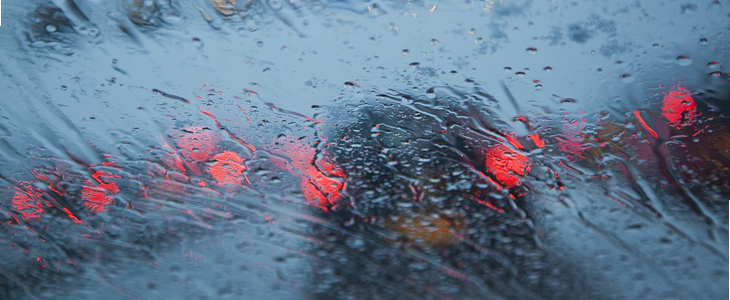
“The weather did it.” That’s the insurance company’s favorite explanation for a crash that happened in heavy rain, fog, or ice. But bad weather does not automatically excuse a driver from responsibility. Georgia drivers are expected to adjust their driving during bad weather by slowing down, increasing following distance, and keeping their vehicles under control.
When a driver fails to adjust to the conditions, that failure can be evidence of negligence. How much the other driver’s choices contributed to your crash is one of the first questions a Macon bad weather accident lawyer at Gautreaux Law investigates.
If you or a family member was injured in a crash during rain, fog, or icy weather in Macon, Warner Robins, or anywhere in Middle Georgia, Gautreaux Law has represented people seriously injured in bad weather crashes for more than 20 years. The firm has recovered over $100 million for clients across a range of personal injury matters.
Georgia measures every driver against ordinary diligence — the care an ordinarily prudent person would use under the same circumstances. Those circumstances include the sky. That’s why the duty doesn’t soften in a downpour, and why lower speeds, more following distance, headlights, and earlier braking are the ordinary adjustments a careful driver makes when visibility drops and the pavement turns slick.
So the legal question is never simply whether it was raining. It’s whether the other driver drove the way a reasonable driver would have driven in that rain.
Fog: The danger is driving faster than the distance you can actually see, so that by the time an obstacle appears, there’s no room left to stop.
Ice: Bridges and overpasses freeze before the road surface around them does, which is why a driver who was fine a mile earlier suddenly loses control on a span.
Heavy rain: Traction and reaction time both drop at the same moment, which is why the speed that felt safe minutes earlier becomes the speed that fails at the first curve.
The posted speed limit is no safe harbor: Georgia law requires a speed no faster than is reasonable and prudent under the actual conditions, and it repeats that demand wherever weather creates special hazards. A driver going the posted limit in a heavy storm can still be driving too fast under the law, because the speed limit sign describes the road on a clear day. The absence of a citation doesn’t settle it either — officers don’t write one in every collision, and a civil claim doesn’t depend on one. Speed alone, with no storm involved, is the ground of our speeding accident page; here, speed is measured against the sky.
A violation of O.C.G.A. § 40-6-180 is not merely a fact in the case. O.C.G.A. § 51-1-6 provides that where the law requires a person to perform a duty, one injured by the breach may recover the resulting damages, and Georgia courts treat the violation of a traffic statute enacted for public safety as negligence per se. That establishes the duty and the breach and leaves proximate cause and damages to be proved. Whether the doctrine applies turns on the statute and on whether the injured person falls within the class it was intended to protect.
Long before any formal defense is filed, the version you meet is the adjuster’s. The recorded statement asks how fast you were going and how well you could see. The evaluation comes back calling the crash unavoidable. The offer arrives reduced by a share of blame nobody has proved. None of that establishes a defense — it’s a position, and it’s answered with the record of what the other driver actually did.
When the argument takes a formal shape in litigation, it usually takes one of two forms.
The “act of God” defense: Georgia law defines an act of God as an accident produced by physical causes that are irresistible or inevitable, including lightning, storms, and floods — but the definition ends by excluding all idea of human agency. A casualty that ordinary care could have prevented is not an act of God, and neither is a storm that combined with a driver’s failure to use ordinary care. A thunderstorm becomes a defense only when nothing the driver did or failed to do contributed to the crash.
The “sudden emergency” defense: This one is easier to raise than it sounds, and it doesn’t excuse a driver outright. It applies only when the peril was sudden, when it arose from circumstances the driver didn’t help create, and when it left no time to think through the best response. A driver who entered a flooded curve at highway speed helped build the emergency being described, which can defeat the defense on its own terms.
These cases turn on the record of what the road and the sky were actually doing — and that record can disappear within hours of the storm passing.
We document what the sky was doing: Official records for that date, hour, and location — National Weather Service data, nearby airport weather observations — can establish rainfall, visibility, and temperature at or near the time of impact, rather than leaving it to memory and argument years later.
We look for video of how other traffic behaved: Dashcam, traffic camera, and nearby business footage can show that other drivers had slowed, moved over, or switched on their lights while the other driver did neither. That footage can be gone within a week.
We photograph the roadway while it still looks the way it did: Water on the surface, the low points where it collects, and storm debris all disappear once the weather breaks. If your vehicle lost traction on standing water, the other driver’s conduct still matters, and so do a further set of questions specific to hydroplaning crashes.
We pull the records generated that day: Emergency calls from the same stretch of road can help corroborate how bad conditions had become and how long they had been that way.
We tie your injuries back to the collision through your treating physicians: Causation gets attacked right after liability, and the argument is predictable: the crash was minor, the storm slowed everyone down, the injury must have come from somewhere else. Medical records that state the mechanism of injury and its relationship to the impact are central to answering it.
What the injuries are, and whether anything is permanent: The same collision produces a different claim depending on what it did to the person in it, and injuries still being treated are injuries whose value isn’t yet known.
How hard fault is contested: In a storm case, some version of a fault argument is usually available, which means the strength of the conditions record does more work here than in a case where fault is obvious. You were also driving in that storm, and an insurer will look for a share of the blame to place on you. How much a share of blame matters, and where it stops a claim entirely, follows a rule set out on our car accident lawyer in Macon page.
Two features of that rule are worth stating precisely. O.C.G.A. § 51-12-33(a) reduces the award in proportion to the injured person’s share of fault, and recovery is barred entirely where that share reaches 50 percent. Senate Bill 68, signed April 21, 2025, amended § 51-12-33(b) to confirm that fault is apportioned among all persons who contributed to the injury even where only one defendant is named, which changes how a storm case with a second potentially responsible party is valued. Which provisions of that legislation reach a given case depends on the provision and on the applicable filing or accrual date.
The same legislation repealed the long-standing bar in O.C.G.A. § 40-8-76.1 on evidence of seat belt nonuse in most civil actions. Failure to use an available restraint is now admissible on negligence, comparative negligence, causation, assumption of the risk, and the apportionment of damages, which gives an insurer a fault argument in a storm case that it did not previously have.
How many parties were responsible: A storm crash isn’t always about one driver. When a storm was forecast and a commercial driver was sent out on a schedule anyway, the decision to dispatch can matter as much as the decision behind the wheel — and a claim against a motor carrier reaches coverage a claim against a driver does not. When a road itself floods, drains poorly, or has a history of the same problem, another party beyond the drivers may share responsibility.
A claim reaching a government entity carries a deadline the ordinary limitation period does not. An ante litem notice is required within six months for a municipality under O.C.G.A. § 36-33-5, within twelve months for a county under O.C.G.A. § 36-11-1, and within twelve months for the State of Georgia under the Georgia Tort Claims Act, O.C.G.A. § 50-21-26, with the state notice going to the Risk Management Division of the Department of Administrative Services as well as the agency involved. Immunity narrows those claims further. The Georgia Tort Claims Act preserves immunity for discretionary functions and for the inspection of property under O.C.G.A. § 50-21-24, and O.C.G.A. § 32-4-93 governs a municipality’s liability for a defect in a street it was bound to keep in repair. Missing the notice bars the claim regardless of merit.
All of that sits inside a two-year window. O.C.G.A. § 9-3-33 gives an injured person two years from the date of injury to bring a personal injury action, and it sets the same two years for a wrongful death action, measured from the date of death. O.C.G.A. § 9-3-30 gives four years for damage to the vehicle itself. Where the injured person is a minor, O.C.G.A. § 9-3-90 tolls the minor’s own period until age 18, while a parent’s separate claim for the child’s medical expenses is not tolled and runs from the injury.
Moving on the evidence in the first days: Video cycles out, water drains, and the road stops looking the way it did. Requesting the weather records and footage early is what leaves a case with something better than two drivers’ competing recollections.
Answering the “nature did it” argument: Those defenses fail wherever the driver contributed, and building the record that shows the contribution is what keeps a claim from being written off as an accident nobody caused.
Trial-ready preparation: A case where fault is contested gets valued against what a jury would likely do with it — a different calculation for a firm that tries cases than for one that doesn’t. Gautreaux Law has tried cases in courts across Georgia, including Bibb County and other Middle Georgia jurisdictions.
These results come from the firm’s automobile and commercial vehicle collision work. They are not presented as bad weather cases, and each turned on its own facts.
| Recovery | Case Type | Outcome |
|---|---|---|
| $10.5 Million | Automobile Accident, Governmental Liability | Traumatic Brain Injury |
| $1.5 Million | Commercial Van Collision | Wrongful Death |
| $400,000 | Car Wreck | Leg Amputation |
| $180,000 | Car Wreck | Brain Injury |
Each case is different and depends on its specific facts and circumstances. Past results do not guarantee a similar outcome. These figures represent gross recoveries before deduction of fees and expenses.
Yes. Georgia law requires drivers to adjust their driving to weather conditions. If the other driver failed to slow down, increase following distance, or otherwise adjust for rain, fog, or ice, that failure is evidence of negligence, not a shield against your claim.
That’s a common tactic, not a legal conclusion. An “act of God” only applies where the driver’s own conduct contributed nothing to the crash — and a storm combined with unsafe driving doesn’t qualify.
Being on the road during bad weather doesn’t automatically make you at fault. Fault depends on whether each driver acted reasonably given the conditions, and an insurer’s attempt to shift blame to you can often be challenged.
Hydroplaning crashes raise their own set of questions about standing water, road design, and the other driver’s speed and reaction. Our hydroplaning crashes page covers that in more detail, and we handle those cases as part of our bad weather practice.
Nothing upfront. We handle these cases on a contingency fee, so there’s no fee unless we recover for you, and we advance the costs of investigating your case, including weather records and video preservation.
If you or a family member was injured in a crash during rain, fog, or icy weather in Macon, Warner Robins, or anywhere in Georgia, Gautreaux Law will review your case at no cost. The firm handles these cases on a contingency fee, which means no fee unless we recover. Reach our office at (478) 475-3428 or request a free case review online.
“No fee unless we recover” refers only to attorney’s fees. Court costs and other case expenses are typically advanced by our firm and reimbursed from any recovery. Contingent fee arrangements are not permitted in all types of cases. Past results do not guarantee a similar outcome. Each case is different and depends on its specific facts and circumstances.
Reviewed by the attorneys at Gautreaux Law, Attorneys at Law. Last updated July 2026.
"*" indicates required fields
778 Mulberry Street
Macon, GA 31201