
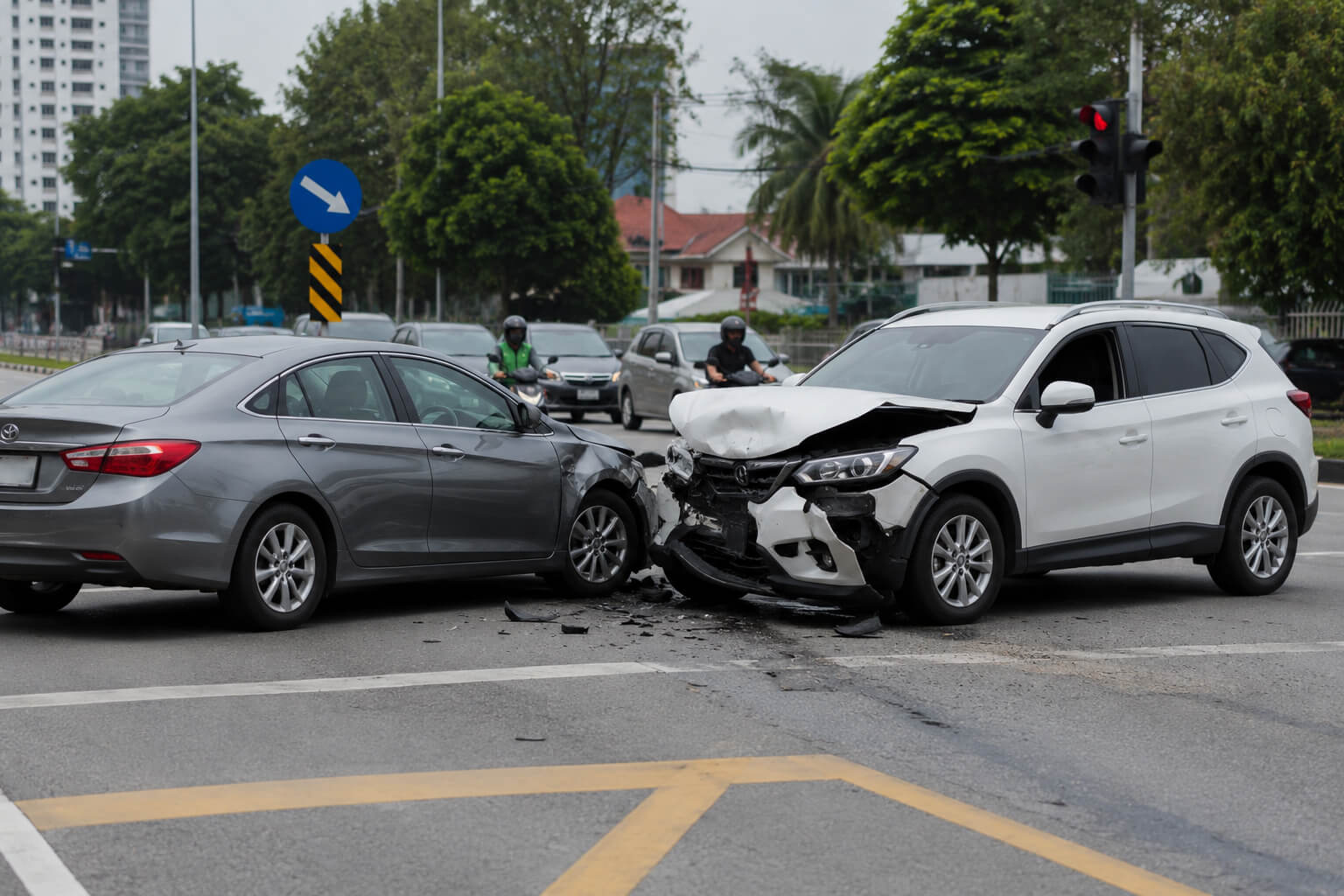
It happened in about two seconds: a car turned, and you didn’t have time to stop. Now an insurance adjuster is asking why you didn’t react faster — instead of asking why the other driver turned in front of you at all.
Georgia law puts the judgment call on the driver making the turn, not on you. Whether it was a left turn across oncoming traffic, a right turn from the wrong lane, a pull-out from a driveway, a U-turn where none was allowed, or an exit taken from the wrong lane, the question is the same: did the turning driver have the right of way at the moment the turn began. A Macon improper turn accident lawyer at Gautreaux Law builds the case around exactly that moment — what the driver could see, and when the turn actually started.
If you or a family member was injured by a driver who turned across your path in Macon, Warner Robins, or anywhere in Middle Georgia, Gautreaux Law has represented people seriously injured in improper turn crashes for more than 20 years. The firm has recovered over $100 million for clients across a range of personal injury matters.
Under O.C.G.A. § 40-6-71, a driver intending to turn left has to yield the right of way to any vehicle approaching from the opposite direction. The statute applies that duty to turns within an intersection and to turns into an alley, a private road, or a driveway, and it covers oncoming vehicles that are within the intersection or so close to it as to constitute an immediate hazard.
Two parts of that provision do most of the work in a real case.
Where the duty applies: It’s not limited to intersections. A driver turning left into a shopping center entrance, an apartment complex, or a side street carries the same obligation. Those turns are often the harder cases, because oncoming drivers have no signal or stop line telling them to expect a vehicle crossing in front of them.
What “immediate hazard” means: It isn’t a distance or a number of seconds. It asks whether the oncoming vehicle was close enough that turning in front of it was unsafe — a judgment the turning driver had to make in the moment, and one we can examine afterward against the physical evidence.
The statute also sets out no exception for a driver who had a green light. A circular green permits the turn. It does not transfer the right of way. What a green light does and does not promise is where our red light page begins; here, the light is background and the turn is the case.
A violation of these turning provisions is more than a fact for the jury to weigh. Georgia treats the violation of a traffic statute enacted for public safety as negligence per se, which establishes the duty and the breach and leaves proximate cause and damages to be proved, and O.C.G.A. § 51-1-6 supplies the underlying principle that a person injured by the breach of a legal duty may recover the resulting damages. The absence of a citation does not defeat that argument, and the issuance of one does not establish it.
Yielding is one question. How the turn was executed is a separate one, and it matters because a turn can be unlawful even when the driver believed the way was clear. O.C.G.A. § 40-6-120 sets the method.
Position: A right turn, both the approach and the turn, has to be made as close as practicable to the right-hand curb or edge of the roadway. A left turn has to be approached in the extreme left-hand lane lawfully available in that direction and, where practicable, made to the left of the center of the intersection. Where there are multiple left turn lanes, the vehicle exits in the lane corresponding to the one it entered, and the statute does not permit a lane change once the intersection has been entered.
Safety and signal: Under O.C.G.A. § 40-6-123, a driver may not turn at an intersection, turn into a private road or driveway, or otherwise turn from a direct course unless and until the movement can be made with reasonable safety. The same section requires an appropriate and timely signal, run continuously long enough to alert a driver coming up from behind or approaching from the opposite direction. A signal first activated after the turn is already underway may not satisfy that timing requirement. The fixed 100-foot requirement that once appeared in the statute was replaced by the time-sufficient-to-alert standard, which is why the presence of a driver who needed to be warned is part of the analysis rather than a measurement taken from the pavement.
U-turns: A U-turn asks a different question — not how the turn was made, but whether it could be made there at all. Under O.C.G.A. § 40-6-121, a vehicle may not be turned to proceed in the opposite direction on any curve, or on the approach to or near the crest of a grade where the vehicle cannot be seen by a driver coming from either direction. The same section bars the maneuver where it cannot be made in safety and without interfering with other traffic, and anywhere a prohibition is posted.
An unpermitted right turn taken from a through lane, a right turn that swings across an adjacent travel lane, or a left turn that drifts into the wrong exit lane all put a vehicle somewhere the drivers around it had no reason to expect. Those can be the collisions the driver alongside had no room to avoid — and the violation sits in the position of the vehicle rather than in the timing of the turn.
The duty on the turning driver is a strong starting point, not the end of the case. An insurer defending a left turn crash will look for a reason the oncoming driver contributed to it.
Speed is a common argument, and it carries real weight, because the immediate hazard question depends on both distance and closing speed. A vehicle farther back but traveling well above the limit changes what a safe gap looked like from the turning driver’s seat. Running a red light, approaching in a lane not open to through traffic, and driving without headlights at dusk are all raised for the same reason.
Georgia reduces a recovery by the injured person’s share of fault, and recovery is barred once that share reaches the cutoff set by statute. That rule, and the percentage it turns on, is set out on our Macon car accident lawyer page. It is why the argument over percentages is part of the case rather than a side issue.
The rule is O.C.G.A. § 51-12-33. The trier of fact reduces the damages award in proportion to the injured person’s percentage of fault, and recovery is barred altogether where the injured person is 50 percent or more responsible for the injury. Senate Bill 68, signed April 21, 2025, amended subsection (b) to confirm that fault is apportioned among all persons who contributed to the injury even in a single-defendant action, and it repealed the bar in O.C.G.A. § 40-8-76.1 on evidence of seat belt nonuse, which is now admissible on negligence, comparative negligence, causation, and apportionment. In a left turn case, where the defense theory is usually that the oncoming driver’s speed created the hazard, the distance between 45 percent and 50 percent is the distance between a reduced recovery and none.
The same analysis runs the other way. If you were the driver making the turn and the other vehicle was speeding or ran the light, being the turning driver does not by itself end a claim.
There is a deadline behind all of it. O.C.G.A. § 9-3-33 gives two years from the date of injury for a personal injury action, and O.C.G.A. § 9-3-30 gives four years for the property damage to the vehicle. Where the turning driver was cited and prosecuted, O.C.G.A. § 9-3-99 can suspend the injury period while that prosecution is pending, up to six years from the date of the crime, though Georgia’s appellate courts read that provision narrowly and it is not a substitute for filing.
These cases are decided on a few seconds, and they usually turn on physical evidence rather than on competing accounts alone. Jarome Gautreaux has practiced Georgia personal injury and wrongful death law since 2000 and co-authored Georgia Law of Torts: Trial Preparation and Practice. That background sets the order of operations here: establish the geometry, test the speeds where the evidence permits, then argue fault.
We work out the geometry of the turn: Where the impact landed on each vehicle and where the vehicles came to rest can help show how far into the turn the turning vehicle had traveled when contact occurred. A strike to the passenger door tells a different story than a strike to the front corner.
We document the approach and exit lanes: Tire marks, debris distribution, and the damage pattern can establish which lane the turn was made from and which lane it was heading into — which is where a § 40-6-120 violation shows up.
We look for video of the moment the turn began: Intersection cameras, dashcams, and cameras on nearby businesses can capture the start of the turn and the position of the oncoming vehicle at that instant — the exact fact the immediate hazard standard turns on.
We work the gap with reconstruction experts: Where there is usable video, event data, or measurable physical evidence, the speed and distance of the oncoming vehicle at the moment the turn started can be analyzed rather than left to two drivers’ estimates. That analysis is often what moves a disputed case.
We take the witness accounts on the signal: Whether a turn signal was used, and when, is a detail that has to be locked in from witnesses early rather than reconstructed months later.
When a turning driver strikes someone on foot, the turning rules are only part of the analysis. Pedestrian right of way and crosswalk rules sit under separate provisions, and those cases run as a pedestrian accident claim alongside the turn questions.
In the improper turn cases we have represented, three facts tend to carry the argument. Where the evidence permits, the turn geometry is established from the physical evidence rather than left entirely to either driver’s account. The video is requested before it cycles out. When the available evidence supports a reliable analysis, the oncoming vehicle’s speed is calculated rather than estimated.
Right-of-way cases handled as evidence problems: These disputes are usually two accounts of the same few seconds, and the answer is built from the geometry and the measurements rather than from the louder account.
Comparative fault handled directly: These are the cases where insurers push hardest on shared blame. Meeting that argument with measurements rather than assertions is what keeps the insurer’s proposed fault percentage from going unanswered.
Trial-ready preparation: A right-of-way case is often decided by how a jury reads a few seconds, and an insurer weighs that risk when it decides what to offer. Gautreaux Law has tried cases in courts across Georgia, including Bibb County and other Middle Georgia jurisdictions.
These results come from the firm’s automobile and commercial vehicle collision work. They are not presented as improper turn cases, and each turned on its own facts.
| Recovery | Case Type | Outcome |
|---|---|---|
| $10.5 Million | Automobile Accident, Governmental Liability | Traumatic Brain Injury |
| $1.5 Million | Commercial Van Collision | Wrongful Death |
| $400,000 | Car Wreck | Leg Amputation |
| $180,000 | Car Wreck | Brain Injury |
Each case is different and depends on its specific facts and circumstances. Past results do not guarantee a similar outcome. These figures represent gross recoveries before deduction of fees and expenses.
Usually, yes as a starting point — Georgia law puts the duty to yield on the driver turning left. But it isn’t automatic. An insurer can still argue the oncoming driver contributed by speeding, running a red light, or driving without headlights, and Georgia reduces a recovery by the injured person’s share of fault. That’s why the immediate hazard evidence matters on both sides of the case.
It’s not a fixed distance or a number of seconds. It asks whether the oncoming vehicle was close enough, given its speed and distance, that turning in front of it was unsafe. That’s a judgment we can test against the physical evidence — the geometry, the video, and the reconstruction — rather than take on either driver’s word alone.
No. A green light permits a turn, but it does not transfer the right of way. A driver turning left on a green light still has to yield to oncoming traffic that is in the intersection or close enough to be an immediate hazard.
Often, yes. Georgia allows an injured person to recover even when they share some fault, as long as their share doesn’t reach the cutoff set by statute — the recovery is simply reduced by that percentage. Our Macon car accident lawyer page explains how that works in more detail.
Nothing up front. Gautreaux Law handles these cases on a contingency fee, meaning there’s no fee unless we recover money for you.
If you or a family member was injured in a turning collision in Macon, Warner Robins, or anywhere in Georgia, Gautreaux Law will review your case at no cost. The firm handles these cases on a contingency fee, which means no fee unless we recover. Reach our office at (478) 475-3428 or request a free case review online.
“No fee unless we recover” refers only to attorney’s fees. Court costs and other case expenses are typically advanced by our firm and reimbursed from any recovery. Contingent fee arrangements are not permitted in all types of cases. Past results do not guarantee a similar outcome. Each case is different and depends on its specific facts and circumstances.
Reviewed by the attorneys at Gautreaux Law, Attorneys at Law. Last updated July 2026.
"*" indicates required fields
778 Mulberry Street
Macon, GA 31201