
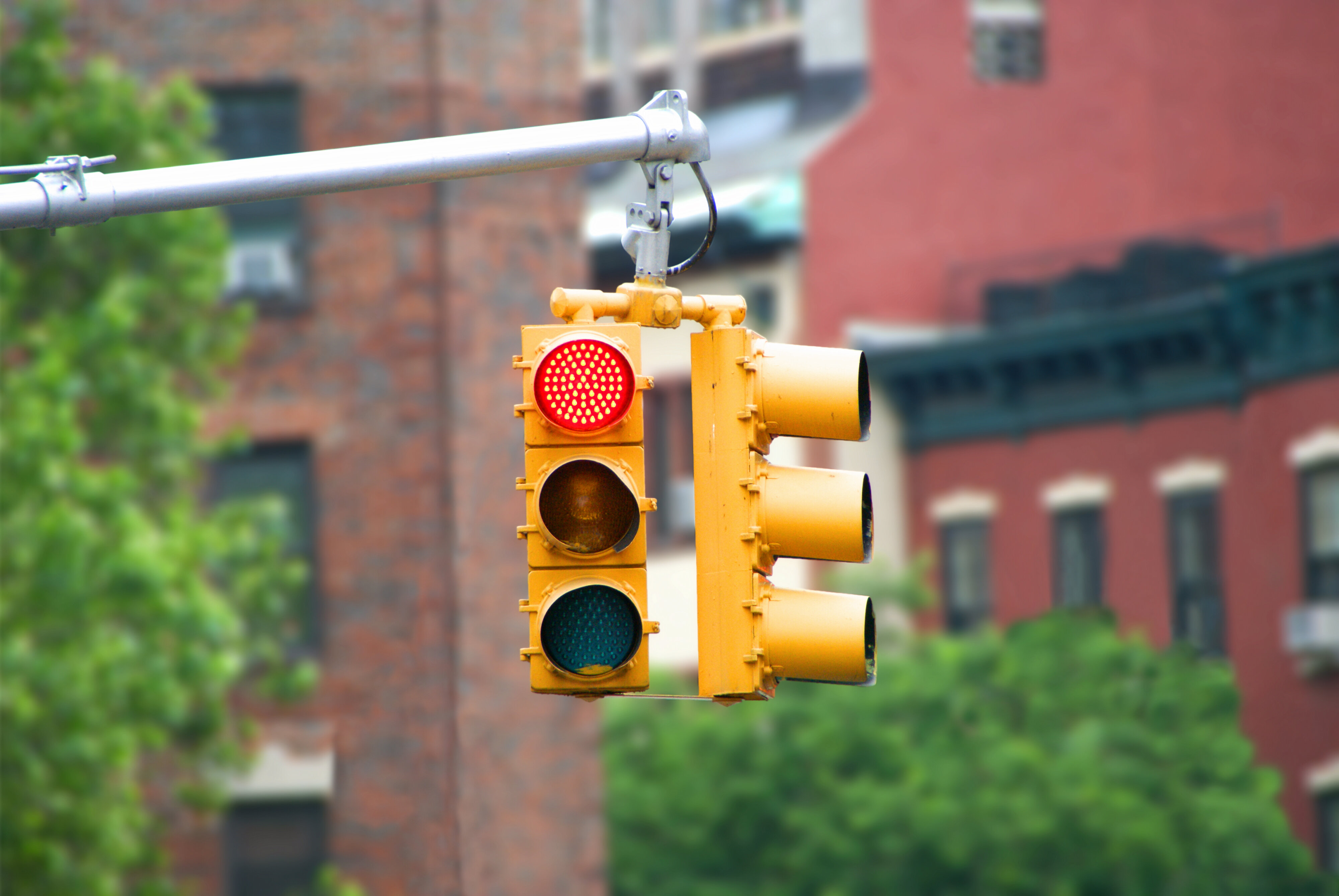
The other driver says the light was yellow. You know what you saw. Under Georgia law, the difference between green, yellow, and red isn’t a matter of opinion — it’s written into the statute, and it’s often exactly what decides who pays for your crash. Getting the evidence to show which version is true is vitally important.
If you or a family member was hurt when another driver ran a light in Macon, Warner Robins, or anywhere in Middle Georgia, Gautreaux Law has represented people seriously injured in red light collisions for more than 20 years. The firm has recovered over $100 million for clients across a range of personal injury matters, tries cases in courts across Georgia, and works on contingency, so there’s no fee unless we win.
Two Georgia statutes work together here. O.C.G.A. § 40-6-20 requires every driver to obey a properly functioning traffic signal. O.C.G.A. § 40-6-21 spells out exactly what each color means — and the gaps between those meanings are where red light cases are actually decided.
Green means go, not “all clear”: A driver facing a circular green may proceed straight through or turn (unless a sign says otherwise), but a driver turning must yield to oncoming vehicles. A green arrow allows the indicated turn, cautiously, while yielding to traffic already using the intersection. Either way, a pedestrian in the crosswalk must be allowed to stop and stay stopped. Green is permission to enter — it is not a promise that the intersection is empty.
Yellow is a warning, not extra time to hurry through: A steady yellow warns that the green is ending and a red is coming next, at which point entering the intersection is prohibited. The warning belongs to the yellow. The prohibition belongs to the red.
Red means stop, and stay stopped: A driver facing red must stop at the marked stop line, or before the crosswalk, or before the intersection itself if neither exists — and remain stopped until the signal allows movement again. Certain turns are permitted after a complete stop, but only with yielding duties of their own toward pedestrians and other traffic.
A signal you genuinely couldn’t see doesn’t count against you: Georgia law also protects a driver from a signal that wasn’t properly positioned or wasn’t legible to an ordinarily observant person at that time and place. A signal turned by wind, blocked by a tree limb, or dark on one approach isn’t a technicality — it’s written into the statute, and it can run for whichever driver the argument is aimed at.
The signal question in a red light case is narrower than it sounds: what was the light actually displaying the moment the vehicle entered the intersection? That’s not the whole case — a driver can still be careless in ways the signal statute never addresses — but it’s the fact everything else gets measured against.
It often comes down to a very short interval, which is why memory alone is a weak tool here. Two drivers can both be completely sure of what they saw. A driver who entered on a late yellow and a driver who entered just after the light turned red are often describing the same few seconds from two different seats. That’s exactly why timing records, video, and physical evidence matter — not to override what either driver remembers, but to test it.
Which green was showing changes what each driver owed — and a green doesn’t settle fault by itself, in either direction.
Turning on a green light: A driver turning on a circular green owes a yield to approaching vehicles. If your crash happened mid-turn, that fight runs on our improper turn page.
A pedestrian’s right of way: Whether the signal was a circular green or a green arrow, a pedestrian in the position the statute describes was entitled to have the vehicle stop and stay stopped for them.
When insurers blame the driver who had the green: A driver who entered on a lawful green can still be accused of being careless in other ways — speed, lookout, lane position. If you had the green and are being told you share the blame, the answer comes from the same provision that granted you the green and from what the intersection actually looked like. Read more on our Macon car accident attorney page.
Conflicting or malfunctioning signals: Sometimes a signal shows green in more than one direction because of a fault or maintenance error. Controller, maintenance, and diagnostic records may help show whether that happened.
A city, county, or state-maintained signal: A claim against the government agency that maintains a malfunctioning signal comes with its own short notice deadlines — six months for a city, twelve months for a county — that run separately from everything else in your case.
Signal dark, flashing, or missing altogether: The right-of-way rules change entirely when there’s no working signal to read. That’s the ground covered by our intersection collisions page, and the injury mechanics of a side-impact crash are covered on our side impact page.
The equipment and the roadway can hold records that let the competing accounts be tested rather than just weighed against each other.
We request the signal timing and phase data: A traffic controller can hold the length of the yellow interval, the all-red clearance interval, and the phase sequence, and in some systems a log of what was displayed. Retention can be short, so we send the request to the responsible agency early.
We canvass for video: Intersection cameras, nearby business cameras, and dashcams from vehicles behind either driver can capture the signal and the entry together — the exact fact the dispute is built around. Some cameras retain nothing at all, so timing matters.
We track down the witnesses who were stopped, not just the ones who were moving: A driver waiting at the cross street may have watched the signal change from a fixed position — a different, often clearer, account than a moving driver can give.
We document the point of entry: Where the impact landed and where the vehicles came to rest can help establish how far into the intersection each vehicle had traveled when read together with the signal sequence.
We work with your treating physicians: A case that may turn on a short interval still has to prove what the collision caused to you.
When no record exists: Some controllers keep nothing, some cameras were never recording, and some crashes happen where neither exists. Those cases get built from physical evidence and from the witnesses positioned to see the signal — and knowing early which kind of case you have changes what we pursue first.
Here is what that focus on the signal, not just the story, looks like when Gautreaux Law handles your case:
The signal treated as evidence, not background: Timing intervals, phase sequence, and maintenance records get overlooked unless someone requests them early. Where they exist, they’re also the part of the case that doesn’t depend on anyone’s memory.
We push back when the injured driver gets blamed for the green: When an insurer argues that a driver with a green should have avoided the collision, the answer is in the same provision that granted the green and in what the intersection actually looked like.
Trial-ready preparation: A dispute over the color of a light can turn on how complete the evidence is, whether it’s evaluated in a claim file or presented in court. Gautreaux Law has tried cases in courts across Georgia, including Bibb County and other Middle Georgia jurisdictions.
A real track record: more than 20 years of Georgia personal injury experience and over $100 million recovered for clients, handled on contingency so there’s no fee unless we win.
These results come from the firm’s automobile and commercial vehicle collision work. They are not presented as red light cases, and each turned on its own facts.
| Recovery | Case Type | Outcome |
|---|---|---|
| $10.5 Million | Automobile Accident, Governmental Liability | Traumatic Brain Injury |
| $1.5 Million | Commercial Van Collision | Wrongful Death |
| $400,000 | Car Wreck | Leg Amputation |
| $180,000 | Car Wreck | Brain Injury |
Each case is different and depends on its specific facts and circumstances. Past results do not guarantee a similar outcome. These figures represent gross recoveries before deduction of fees and expenses.
The driver who entered the intersection after the light turned red is generally at fault, but fault isn’t always obvious from the outside — signal timing, video, and witness accounts often have to be pulled together to show what the light was actually doing when each vehicle entered.
No. That’s a common dispute, and it’s exactly why timing records, video, and physical evidence matter — they can test what each driver remembers rather than leaving the case as one person’s word against another’s.
If it’s safe to do so, it helps to note the location of any traffic, business, or dashcam cameras near the intersection and report the crash right away. That footage, along with signal-timing data from the traffic controller, is often kept only briefly before it’s overwritten, so getting an attorney involved quickly gives us the best chance of requesting and preserving it before it’s gone.
Georgia law accounts for that. A signal that wasn’t properly positioned or wasn’t legible to an ordinarily observant person may not count against the driver facing it, and maintenance or diagnostic records can help show whether a malfunction occurred.
A claim involving a government-maintained signal comes with its own short notice deadlines — as little as six months for a city or twelve months for a county — so it’s important to get an attorney involved quickly.
We handle these cases on a contingency fee, so there’s no upfront cost and no fee unless we recover for you. Most Georgia personal injury claims must be filed within two years, though claims against a government entity can carry much shorter notice deadlines — another reason to talk to us early.
If you or a family member was injured in a red light collision in Macon, Warner Robins, or anywhere in Georgia, Gautreaux Law will review your case at no cost. The firm handles these cases on a contingency fee, which means no fee unless we recover. Reach our office at (478) 475-3428 or request a free case review online.
“No fee unless we recover” refers only to attorney’s fees. Court costs and other case expenses are typically advanced by our firm and reimbursed from any recovery. Contingent fee arrangements are not permitted in all types of cases. Past results do not guarantee a similar outcome. Each case is different and depends on its specific facts and circumstances.
Reviewed by the attorneys at Gautreaux Law, Attorneys at Law. Last updated August 2026.
"*" indicates required fields
778 Mulberry Street
Macon, GA 31201